
Start with what you want out of the water
People buy filters for three reasons: taste and smell, worry about lead, or a general wish for cleaner water. These are different goals, and each calls for a different filter. A pitcher with a carbon cartridge solves the first. The second needs a filter certified for lead reduction, which you check by name on the certification listing.
Be careful with marketing claims like pure or purified. The only claim worth acting on is a certification to a named NSF/ANSI standard for the specific substance you care about.
Types of under sink systems compared
The NSF/ANSI standards are published at nsf.org. Always confirm that the exact model you are buying appears in the certified products search.
| Type | What it is for | Trade-offs |
|---|---|---|
| Carbon block or granular carbon | Chlorine taste and odor. Certified to NSF/ANSI 42 for aesthetic impurities | Simple and compact. Does not remove everything, and cartridges need regular changes |
| Carbon with health-effect claims | Certified to NSF/ANSI 53 for contaminants with health effects set by the EPA and Health Canada | Check which contaminants the listing names, since certification is not universal |
| Reverse osmosis (RO) | Pushes water through a membrane. Certified to NSF/ANSI 58 | Needs a drain connection, a storage tank, and sends some water to drain |
| RO with remineralizing stage | Adds some minerals back after the membrane for taste | Extra cartridge to replace. Taste improves but the extra stage is optional |
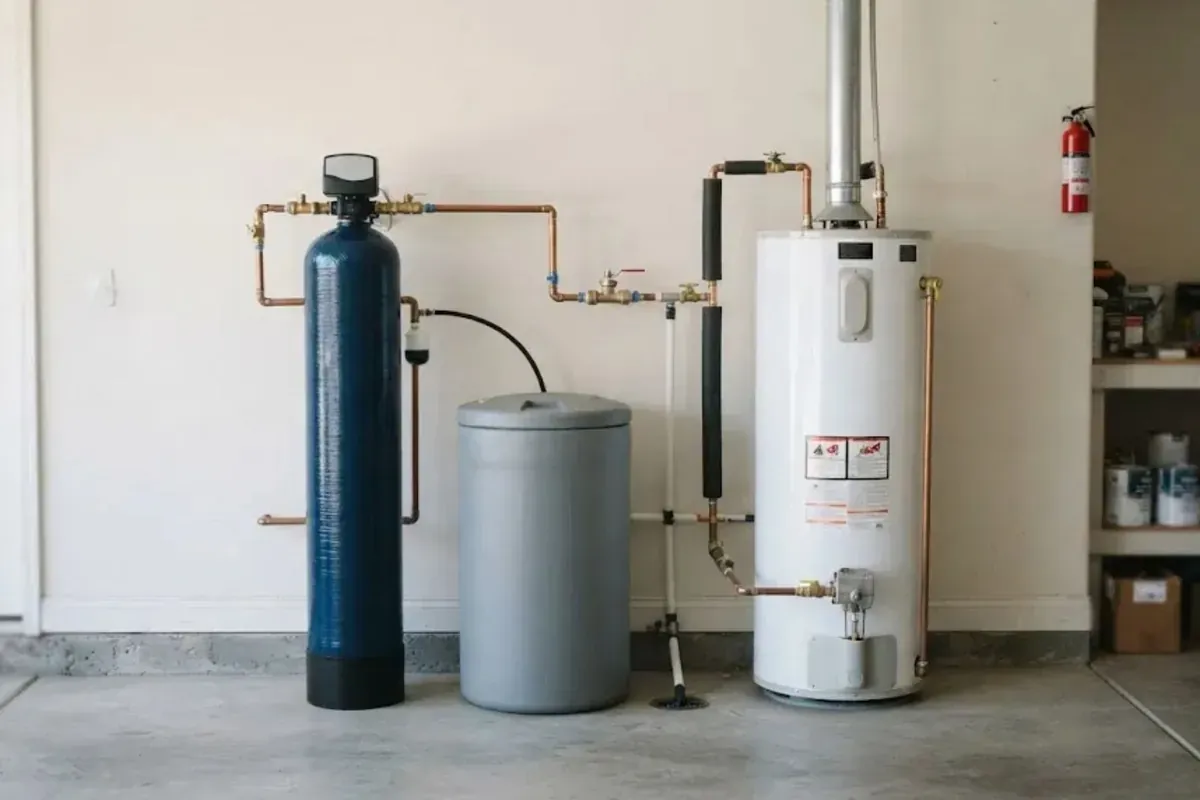
| Whole-house or softener | Treats all water entering the house | Different job. Not a drinking-water filter in itself |
Reading an NSF label and checking it yourself
NSF/ANSI 42 covers filters that reduce aesthetic impurities such as chlorine, taste, and odor. NSF/ANSI 53 covers filters certified to reduce contaminants with health effects, and NSF/ANSI 58 covers reverse osmosis systems. NSF also notes that certification to one standard does not mean a product reduces every contaminant.
So read the performance data sheet. Search the model on the Certified Products and Systems page at nsf.org, look for the exact contaminant you care about, and ignore a box that only shows a logo. If you cannot find the model on that list, treat the claim as unverified.
Need a plumber, not a guide?
Call the 24/7 line. A licensed, insured plumber, a clear price before work starts.
Carbon filter or reverse osmosis: a fair comparison
Carbon filter
- Smaller footprint under the sink.
- No drain line needed in most designs.
- Good for chlorine taste and odor.
- Check the listing before assuming it addresses lead.
Reverse osmosis
- Certified under NSF/ANSI 58 for the contaminants listed.
- Needs a drain connection and an extra faucet or hole in the sink.
- Slower to fill a glass, because it uses a storage tank.
- Membrane and filters need scheduled replacement.
Park Ridge note: what the city says about lead and your service line
Park Ridge's 2020 water quality report lists lead and copper results at 30 sample sites, none above the action level, and it advises flushing the tap after water has sat for several hours. Ask Public Works for the current annual report, because the 2020 numbers are not the latest.
The City's lead service page says the City owns the service line from the water main up to and including the shutoff box (called a B-box), and the property owner owns it from the B-box to the water meter. Illinois requires an inventory by 2027, the city has started it, and lead service lines must be replaced by 2044. The page links to a public dashboard and says lead lines are more likely in homes built before 1986.
For your decision: if your house is older, check the dashboard and ask the city what it knows about your line before you pick a filter. A certified filter helps at one tap, but it does not replace knowing what your service line is made of.
Before you buy or install
- Decide what you want removed: taste, a named contaminant, or both.
- Read the current annual water quality report from Park Ridge.
- Check the exact model at nsf.org under the standards that match your goal.
- Measure the cabinet space and confirm there is room for the tank and cartridges.
- Note whether your sink has a spare hole for a separate drinking faucet.
- Plan the cartridge change dates and put them on a calendar.
- Flush any new filter as the instructions say before drinking from it.
What a plumber adds to the install
Many carbon systems are a weekend job: shut off the cold supply, tee into the line, mount the housing, and check for drips. RO takes more work because it needs a drain saddle on the sink drain, a hole drilled in the sink or counter for the faucet, and tubing run cleanly so it does not kink.
Our water softener and filtration team can size and install either type, and we can add a drain connection on a plumbing installation visit. If you have a leak at a fitting after a DIY install, call our 24/7 line.
Nearby towns
We serve Park Ridge and nearby towns, including Norridge and Des Plaines. Water suppliers differ from town to town, so use your own city's report when deciding what to filter.
Frequently asked questions
Only if the model is certified for lead reduction. Look the exact model up at nsf.org and read which contaminants the listing names. A carbon filter marked only for chlorine does not count.
It depends on your goal. RO is certified under NSF/ANSI 58 and removes more than a basic carbon filter. It also needs a drain connection, takes space, and wastes some water to drain.
No. It is optional and mostly affects taste. RO water can taste flat to some people, and the extra cartridge adds minerals back.
Follow the maker's schedule. A filter past its life can stop working and may hold bacteria, so mark the change date when you install it.
Park Ridge buys Chicago's treated Lake Michigan water and publishes an annual report. The 2020 report showed no lead or copper sites above the action level. Read the current report and decide for your own household.
Check the lead service line inventory dashboard on the Park Ridge site, or call Public Works. Homes built before 1986 are more likely to have lead lines, according to the city.