
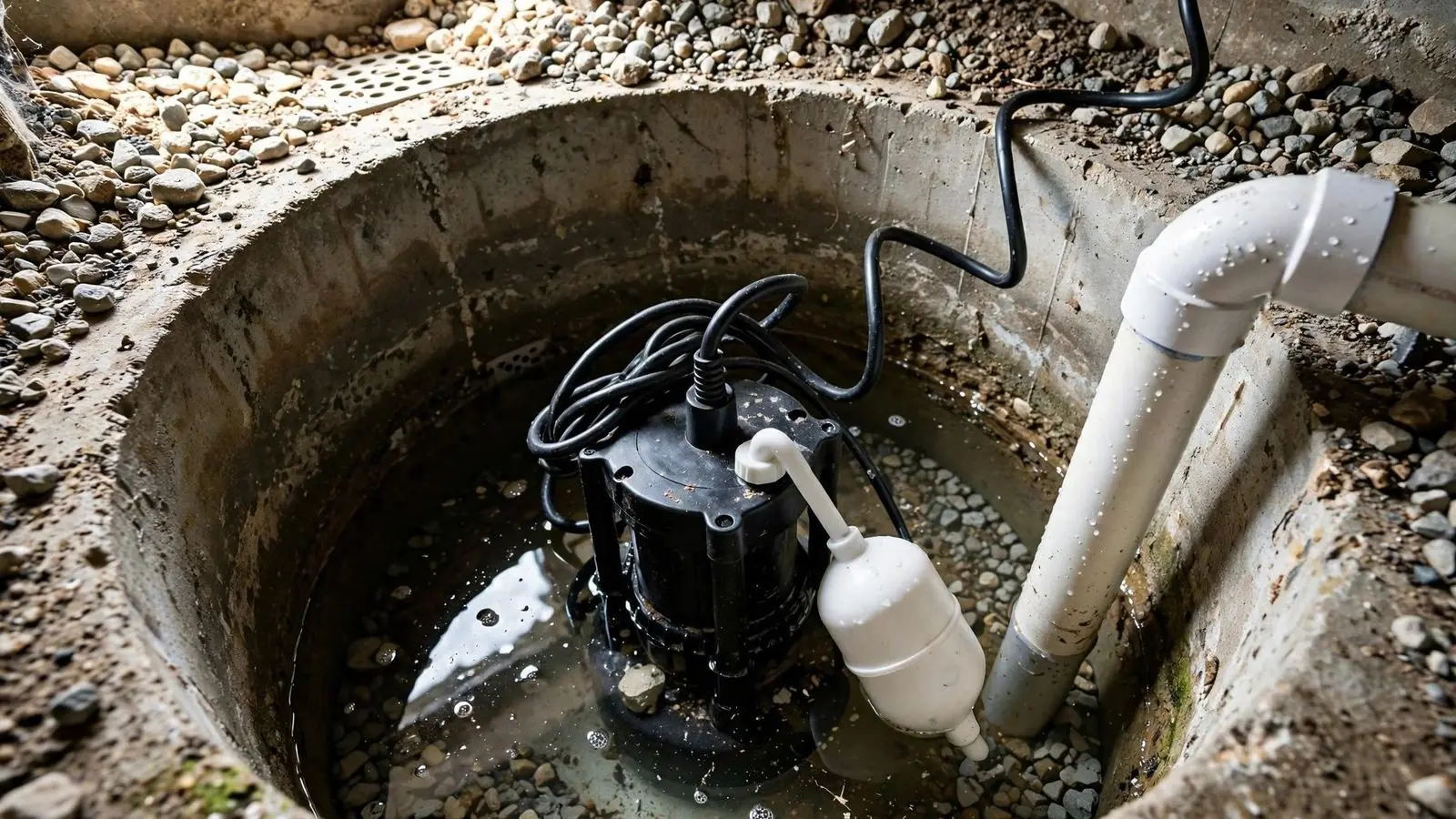
When it happens: heavy rain, spring melt, and power failures
Sump pumps fail when they are needed most. The big risk windows are a heavy summer thunderstorm, a spring thaw, and any storm that knocks out power. A pump that sat idle for months can also stick when the first heavy rain arrives.
Winters bring a different problem. Zone 5b freezes can ice up the discharge line, and the county hazard plan notes storms can drop more than 10 inches of snow. When the snow melts quickly, the pit has to keep up. A pump that works in a dry week may not keep up in a thaw. If seepage continues even when the pump runs, basement waterproofing is the longer-term question.
Sump pump failure right now: what to do while water rises
If the pit is full and the pump is silent, act quickly but stay safe. Our dispatch handles failures overnight and on weekends, and same-day help depends on the storm, so call early.
- Check that the pump is plugged in and the outlet or GFCI has not tripped.
- Reset the breaker only if the floor around the panel is dry.
- Unplug the pump before touching it, free a stuck float, then plug it back in to see whether it runs.
- Move boxes, electronics, and furniture off the floor and away from the pit.
- Stay out of the basement if water has reached outlets or the panel.
- Use a wet vacuum or bucket to lower the pit if you can do it safely, then call dispatch.
Park Ridge note: three floods and a combination sewer
The Cook County hazard plan for Park Ridge records nearly 500 basements flooded on July 23, 2011. Flooding in April 2013 was federally declared (FEMA DR-4116), and a flash flood on August 7, 2018 caused reported property damage. For you, that means one failed pump in a wet year is not unusual. Test yours before the next storm and keep a plan for power loss.
The same plan attributes much urban flooding to the city's antiquated combination sewer system. A combination sewer carries storm and household flow together, so heavy rain can send water backward. A sump pump handles groundwater at the pit. It does not stop a sewer backup, which is a different problem covered under sewer line cleaning.
Rain in the forecast and an old pump?
Ask dispatch about a same-day check of the float, the check valve, and the discharge line before the storm.
Why sump pumps fail
Burned-out motor
An old or overworked pump can run hot, hum, or trip a breaker.
Stuck float
The float rises with the water and starts the pump. If it jams against the pit wall, the pump never starts.
Power outage
No power means no pump, which is why storms and failures arrive together.
Clogged intake
Silt, gravel, or debris blocks the screen and the pump runs without moving water.
Failed check valve
Water drains back into the pit after each cycle, so the pump runs again and again.
Blocked or frozen discharge
If the pipe outside is blocked, iced, or crushed, the pit has nowhere to send water.
A stuck float and other quick fixes
A float that sits against the side of a narrow pit is the most common easy fix. Unplug the pump, reposition the float so it moves freely, and refill the pit with a bucket to watch it work. If the pump still will not start, the motor or the switch has likely failed.
Debris in the pit lifts the float or jams the impeller, so cleaning the pit and the intake screen is part of any service. A pump that cycles every few seconds, runs without moving water, or makes a grinding noise should be checked before the next storm, not after. A pump that runs in dry weather may also be pumping a supply leak, which leak detection can sort out.
Battery backup or water-powered backup
Battery backup pump
- Runs on a stored battery when power fails.
- Works without city water pressure.
- Battery needs checking and replacing over time.
- Run time depends on how fast the pit fills.
Water-powered backup
- Uses city water pressure to push pit water out, no battery.
- Needs steady municipal pressure and a suitable discharge.
- Uses more water while running, which shows on the bill.
- Installation rules and backflow protection should be confirmed locally.
Discharge line placement, freezing, and the check valve
The discharge line carries pit water outside and away from the foundation. If it ends too close to the house, the water soaks back in and the pump cycles on the same rain. In winter, the end of the line can freeze solid, so many installs use a short drain-back section or an open grate.
A check valve on the discharge line stops water from falling back into the pit. A loud thump when the pump shuts off is a working check valve, and a pump that restarts seconds later means it may be leaking. Where the discharge may legally go in Park Ridge, ask the Park Ridge Building Department.
Ejector pumps: the sewage version
An ejector pump looks similar but does a different job. It lifts toilet and drain waste from a basement bathroom or laundry up to the main drain. It sits in a sealed basin, not an open pit, and it should never be tied to a sump pit. If you have one, it needs its own checks. Our plumbing installation page covers adding one.
Repair or replace: a quick decision guide
| What you see | Likely cause | Common direction |
|---|---|---|
| Pump hums but does not pump | Stuck impeller or failed motor | Clear debris, replace if the motor is weak |
| Pump never starts, pit full | Stuck float or dead switch | Free the float or replace the switch |
| Runs nonstop, water level stays high | Undersized pump or blocked discharge | Clear the line, then consider a larger unit |
| Pump restarts seconds after stopping | Failing check valve | Replace the check valve |
| Pump is very old and noisy | Wear on bearings and seals | Replace the pump before the next storm |
Monthly test
Fill
Pour a bucket of water slowly into the pit until the float lifts.
Listen
The pump should start, run smoothly, and clear the pit.
Watch
Check that the discharge outside is flowing and not freezing or clogged.
Test backup
Unplug the main pump briefly to see whether the battery or backup starts.
What decides the cost of a sump pump repair or replacement
The price depends on whether the pit needs a new part, a new pump, or a new system. For your real number, call our 24/7 line.
Most homeowner policies do not cover sump pump failure or sewer and sump backup unless you added an endorsement. Check your policy before the storm, and photograph the pit and the water line if you do have a claim.
Code notes for sump pump work
A sump pump is part of the home's drainage system, so work on it and its discharge piping follows the Illinois Plumbing Code, 77 Ill. Adm. Code 890. According to the City of Park Ridge resident FAQ, Article 15 of the Municipal Code requires a permit for all plumbing installations or alterations. Ask the plumber where the discharge line goes before a replacement, since that decision belongs to the whole system.
Frequently asked questions
Yes. Our 24/7 dispatch takes pump failures overnight and on weekends, including during storms. Tell us whether the pit is full and whether you have power so we can say what to try first.
Not always. Heavy rain and a high water table can keep a pump running. If it runs in dry weather, the check valve, an undersized pump, or a leaking line may be the cause.
No. A sump pump moves groundwater out of a pit. A sewer backup comes up through floor drains or toilets, and that is a different repair.
We did not find a simple rule on the city site, so ask the Park Ridge Building Department before routing or changing a discharge line.
Report it to the landlord or property manager in writing. If water is entering, tell them it is urgent. Many leases make the landlord responsible for the pump.
Yes. Tell us whether the pump is a sump or an ejector and whether water is rising so we know what to bring.