
Toilet overflowing right now: what to do first
Water rising toward the rim is the one toilet problem that cannot wait for a business-day callback. Stop adding water first, then deal with the cause. Do not flush again to see if it clears, because every flush sends more water into a bowl that has nowhere to go.
Lift the tank lid and push the rubber flapper down, or hold the float up, so the tank stops refilling. If the bowl keeps rising, close the shutoff valve on the wall or floor behind the toilet. Our 24/7 line takes overflow calls at night and on weekends.
- Turn the shutoff valve behind the toilet clockwise until it stops
- Lift the float or hold the flapper closed so the tank cannot refill
- Do not plunge a bowl that is still rising, wait for the level to drop first
- Do not flush again, even if the water looks like it is going down
- Lay towels at the base and keep children and pets out of the bathroom
- If sinks, the tub or floor drains gurgle too, stop all water use and call
Six things a failing toilet is telling you
Most toilets give a warning before they fail. These are the signs we hear about most often, and what each one usually means.
Runs on and on
Water trickles into the bowl, or the tank refills every few minutes with no one flushing. A worn flapper or a fill valve that will not shut off is the usual cause.
Weak or slow flush
The bowl swirls but does not clear, or you need two flushes. Look for mineral buildup under the rim, a partial clog or a low water level in the tank.
Clogs that return
A plunger works for a day and the blockage comes back. That can mean something stuck in the trap, or a problem further down the line.
Water at the base
A damp ring, a stained floor or a soft spot near the bowl. The wax seal, the flange or a supply connection is the usual suspect.
Rocking bowl
A toilet that moves when you sit has loose bolts or a damaged flange. A moving bowl breaks its own seal over time.
Phantom refills
The tank hisses or refills by itself when the house is quiet. That sound means water is slipping past the flapper.
Running toilet and tank leaks: flapper, fill valve and wasted water
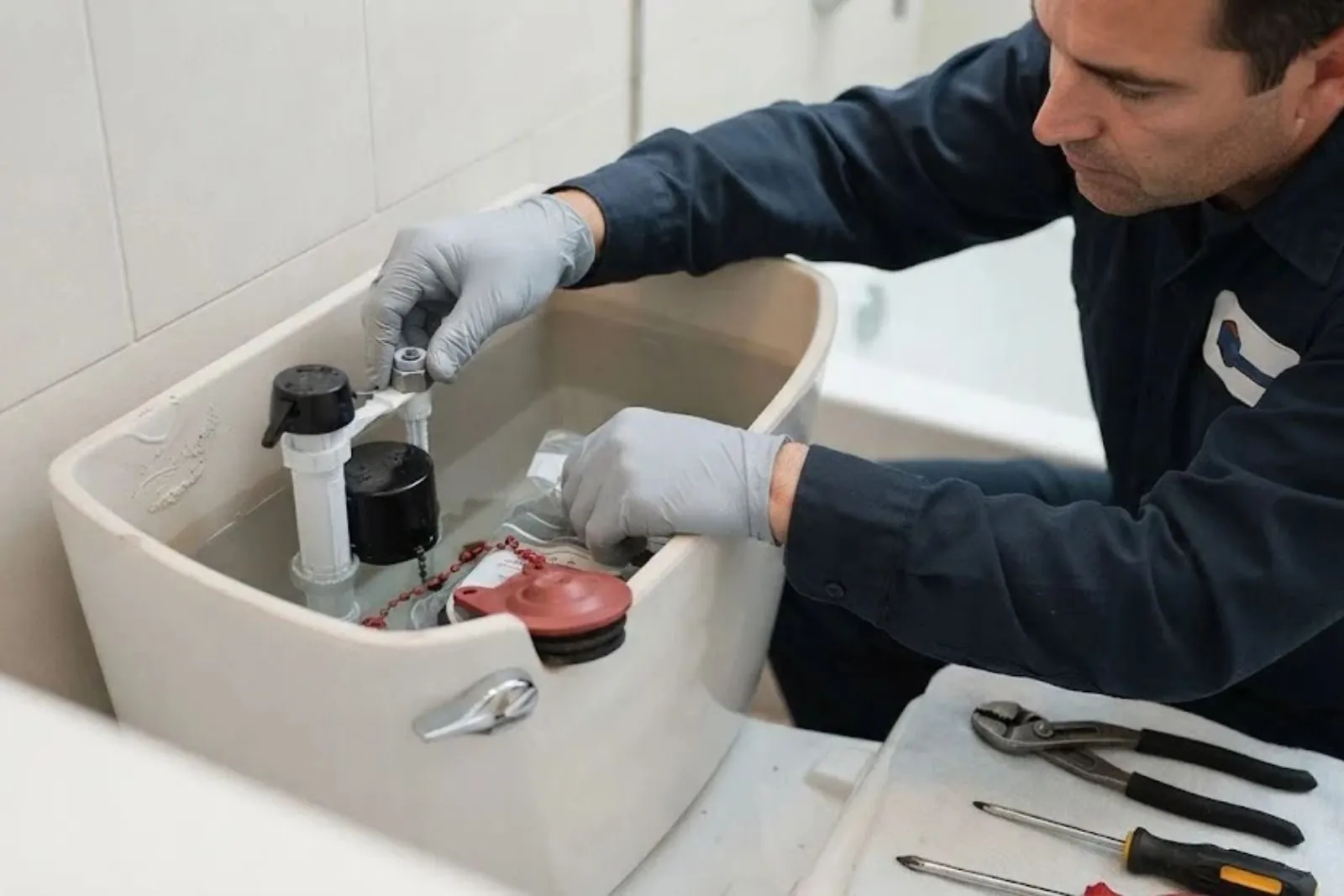
A running toilet is the most common repair people ask about. Inside the tank, a rubber flapper seals the opening to the bowl, and a fill valve refills the tank and shuts off when a float rises. If the flapper warps or the chain is too tight, water leaks past it into the bowl, and the fill valve opens again to replace it.
You can test for a silent leak at home. The U.S. Environmental Protection Agency (EPA) says to put a few drops of food coloring in the tank and wait 10 minutes. If color shows up in the bowl without a flush, the toilet is leaking, so flush right away to keep the dye from staining the tank. EPA also suggests checking the flapper from time to time and replacing it at least every five years.
The waste adds up. EPA reports that the average household's leaks waste more than 9,300 gallons of water a year, and a quiet toilet leak is a classic source. Park Ridge bills water every other month, so a leak can run for weeks before a bill shows it. The city's WaterSmart portal offers leak alerts, which gives you an earlier warning.
A new flapper or fill valve is a short repair. If the tank parts are cracked or crumbling with age, we may suggest replacing the whole set of internals, or the toilet itself, and we will tell you which makes more sense.
Water on the bathroom floor?
Close the wall valve, then call our 24/7 line and we will sort out the rest.
Weak flush and repeat clogs
A weak flush usually has one of three causes. Mineral deposits can block the small jets under the rim, the water level in the tank may sit too low to push waste through, or something is partly blocking the trap, the curved passage built into the base. Vinegar on the rim jets, a corrected float setting and a closet auger fix many of these without new parts.
A closet auger is a short, curved cable made for toilets, and it reaches the trap without scratching the porcelain. If it clears the bowl but the clog returns within days, or if a second toilet, a tub or a floor drain also slows down, the blockage is probably past the toilet. That is a drain job, and drain cleaning with a cable or camera is the right next step.
Wipes labeled flushable, paper towels, cotton swabs and children's toys are frequent culprits. Tell us what went down when you call, since it changes the plan.
Leaking at the base: wax ring, flange and loose bolts
A toilet sits on a flange, a ring fastened to the floor over the drain pipe. A wax ring or foam gasket between the bottom of the bowl and the flange seals that joint against water and sewer gas. When the seal fails, water seeps out at the base when you flush, and you may smell sewer gas in the bathroom.
Wobble is the usual reason. A toilet that rocks flexes the seal until it leaks, and a cracked or corroded flange makes it worse. The fix is to pull the toilet, replace the wax ring, check that the flange is solid and sits at the right height, and set the bowl level on new bolts. If the floor underneath is soft, that repair comes before the toilet goes back.
Water at the base can also come from the tank bolts or the supply connection, so a plumber checks those first. Caulk around the bowl will not solve it, because it hides a seep while water keeps soaking the subfloor. A stain on the ceiling below is the warning sign, and leak detection can confirm where the water is going.
Supply line and shutoff valve
The shutoff valve, often called an angle stop, is the small valve on the wall or floor that feeds a braided or plastic supply line to the tank. If it drips at the stem, will not turn or will not close all the way, you have lost the one tool that stops an overflow. Old valves often seize because they sit untouched for years.
Replacing a supply line is quick when the valve works. When the valve itself is stuck or corroded, a plumber closes the water at the main, swaps the valve and tests it so that it closes the next time you need it. Forcing a stiff valve can snap the stem and start a leak, so turn it gently and stop if it resists.
Repair the toilet or replace it
Repair usually makes sense when
- Only the flapper, fill valve or handle has failed.
- The tank and bowl have no cracks.
- It flushes well whenever the parts are working.
- The leak at the base is just a worn wax ring.
Replacement usually makes sense when
- The tank or bowl has a hairline crack.
- It clogs again and again even with a clear line.
- Parts are no longer sold for an older model.
- The flange or floor needs work anyway and the toilet is old.
Choosing and installing a new toilet
Start with the rough-in, the distance from the finished wall to the center of the drain. A 12 inch rough-in is the most common, but measure before you shop, because a toilet built for a 10 or 14 inch rough-in will not sit right on a 12 inch layout.
Next comes the bowl. Elongated bowls are roomier, round bowls save a little space, and taller comfort-height bowls are easier on knees. One-piece toilets are simpler to clean, and two-piece models are easier to carry up the stairs. Dual-flush models offer a lower-volume option for liquid waste.
The EPA WaterSense label means a tank-type toilet uses 1.28 gallons per flush or less, which EPA says is 20 percent less than the 1.6 gallon federal standard, and that it has passed independent flushing tests. The label is a useful tiebreaker, but fit and flush performance matter just as much.
Installation is more than swapping bowls. We shut off the water, pull the old toilet, check the flange and floor, set a new seal and supply line, and test for leaks. Park Ridge's municipal code requires a permit for plumbing installations or alterations, so we confirm with the Park Ridge Building Department what a given job needs. Larger bathroom changes fall under plumbing installation.
Toilet symptom guide: likely cause and next step
| What you see | Likely cause | What happens next |
|---|---|---|
| Water keeps running into the bowl | Warped flapper, tight chain or fill valve that will not shut off | Dye test, then replace the flapper or fill valve |
| Bowl rises after a flush | Clog in the trap or a blocked line | Close the shutoff valve, then auger the toilet or clear the line |
| Water around the base after flushing | Failed wax ring or loose flange | Pull the toilet, reset it on a new seal and check the flange and floor |
| Toilet rocks side to side | Loose bolts or a broken flange | Secure or repair the flange before resetting the toilet |
| Wet floor under the tank or at the wall | Tank bolts, supply line or shutoff valve | Tighten or replace the failed connection |
| Tub and sink gurgle when you flush | Partial clog in a branch or main line | Cable or camera the line, which is a drain job |
What changes the price of a toilet repair
Toilet work ranges from a small part swap to a full reset over a repaired floor, so the price follows the job and not the symptom. For your real number, call our 24/7 line.
A sudden overflow that damages floors may be covered by a homeowner policy, but a worn part or a slow leak usually is not, and sewer backup often needs a separate endorsement. Check your policy, and photograph the water and the damage before you clean up.
Park Ridge note: toilets, the combination sewer and your water bill
The Cook County Multi-Jurisdictional Hazard Mitigation Plan annex for Park Ridge blames much of the city's urban flooding on an antiquated combination sewer system, and nearly 500 basements flooded on July 23, 2011. For you, that means a toilet that backs up during a heavy storm, with gurgling floor drains nearby, is a sewer problem and not a toilet part. Stop using water and call.
Under Municipal Code 11-1-6, as quoted on the city FAQ, the homeowner repairs the private sewer lateral up to and including the connection to the sewer main. When every toilet in the house is slow, we look at that line before we blame a fixture, and sewer line repair covers it if the pipe itself has failed.
Frequently asked questions
Yes. Our dispatch line is open 24/7, including nights and weekends, for overflows and active leaks. Same-day appointments are available when the schedule allows for running toilets and slow leaks that can wait a few hours.
For a short time, yes, but it wastes water around the clock. If it will be a day or more before repair, close the shutoff valve and flush by hand with a bucket of water.
No. Chemical cleaners can sit in the bowl, splash on you or the plumber and damage older fittings. A plunger or closet auger is safer, and a plumber can use a camera if the clog keeps returning.
Park Ridge's code requires a permit for plumbing installations or alterations, and permit rules vary by job. We confirm with the Park Ridge Building Department before we start.
Shut the valve behind the toilet to limit damage, then tell your landlord or property manager right away. Your lease decides who pays, and we can work with either of you.
Water is slipping past the flapper into the bowl, and the fill valve tops up the tank. A dye test confirms it, and a new flapper usually fixes it.
Dry the base and floor, then flush and watch where the first drops appear. Water that shows up only after a flush points to the seal, and a stain on the ceiling or in a crawl space below calls for a closer look.