
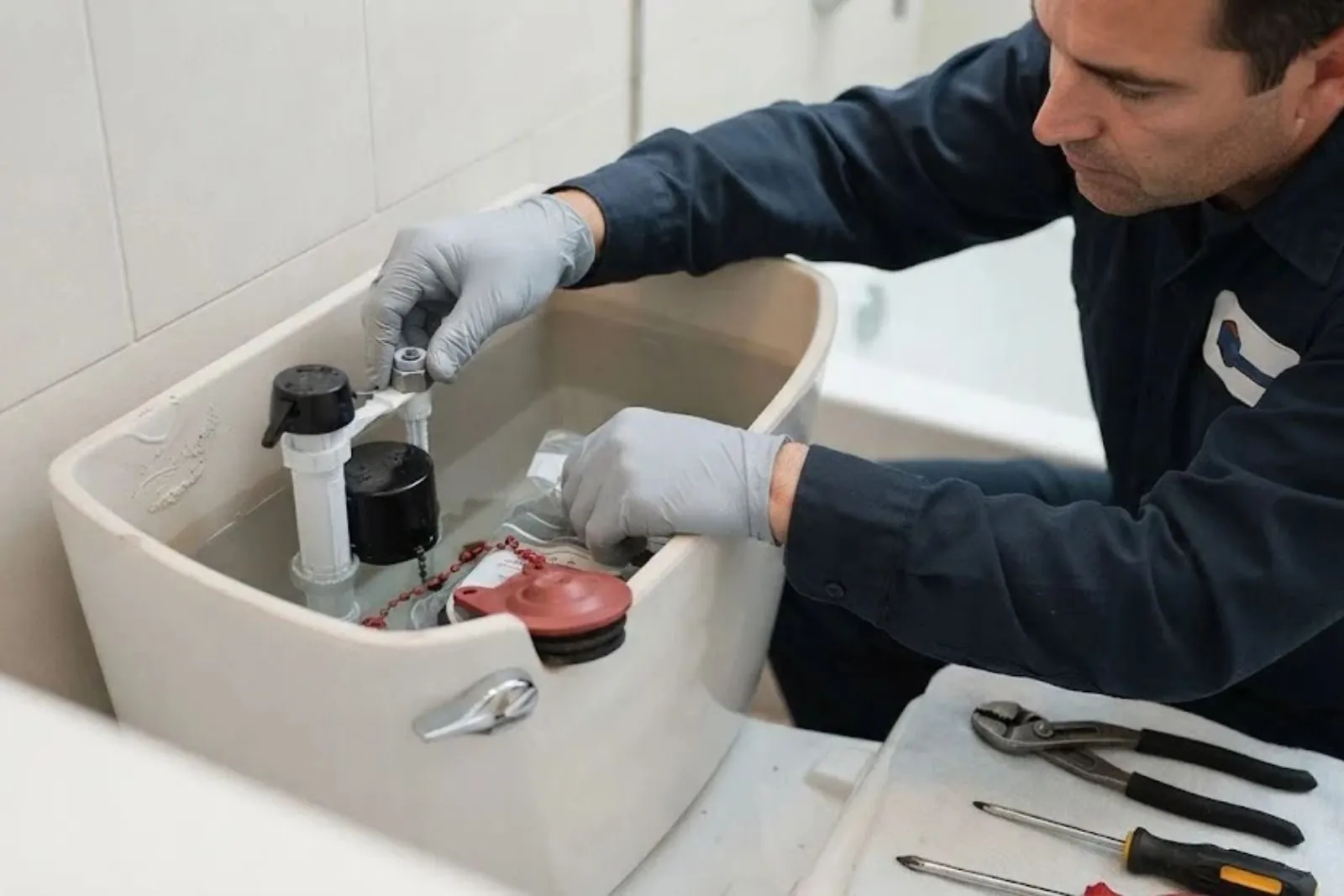
Is it the handle, the chain, or the flapper?
Open the tank lid and watch what happens when you flush. This table matches what you see to the part that is usually at fault.
| What you notice | Likely part | What to do |
|---|---|---|
| Handle is loose and spins but still flushes | Mounting nut or worn handle | Tighten the nut or replace the handle |
| Handle moves but nothing lifts inside the tank | Chain unhooked or broken, or arm snapped | Reconnect the chain or replace the lever |
| Handle works but the toilet runs afterward | Flapper not sealing, or chain too short | Adjust slack, then replace the flapper if it still runs |
| Weak flush, flapper drops early | Chain too long or caught under the flapper | Shorten the chain and clear any tangle |
| Handle must be held down to finish a flush | Chain too long, or flapper worn and floppy | Fix slack first, then check the flapper |
How to replace a toilet handle
Open the tank
Lift off the tank lid, set it somewhere safe, and flush once to drop the water level.
Detach the arm
Unhook the chain from the handle arm. Many toilets use a nut on the inside that loosens clockwise, so test gently before forcing it.
Swap the handle
Pull the old handle out through the front or side of the tank and slide the new one in, matching its direction.
Reset the chain
Tighten the nut, hook the chain on, and flush several times to confirm the flapper lifts and drops cleanly.
Handle types and how to match yours
Most tank handles mount on the front of the tank. Others mount on the side or the corner, and the arm has to point toward the flapper, so a front handle will not fit a side-mount tank without a bend or an adapter. Measure the hole position and take the old handle to the store.
Finish and material matter less than fit. Chrome, brushed nickel and plastic all work. Brass or metal arms with a plastic nut are common, and some handles have a longer arm for tanks with a farther flapper. Buy the type that matches the old lever, then pick the finish you like.
Need a plumber, not a guide?
Call the 24/7 line. A licensed, insured plumber, a clear price before work starts.
Getting the chain length right
The chain needs a little slack when the flapper is closed, about the width of a finger or half an inch is a common rule of thumb. Too tight and the flapper cannot seat fully, so the tank leaks into the bowl. Too loose and the flapper may not lift high enough, which gives a weak flush.
Clip the chain to the hole in the arm that gives the right slack, and trim the extra with a pair of cutters. A long leftover tail can slip under the flapper and keep it from closing, so snip it short.
Before you start: a quick checklist
- Buy a handle that matches your tank's mounting position (front, side or corner).
- Have an adjustable wrench, a towel, and a small bucket ready.
- Flush once to lower the tank water, but leave the supply valve on.
- Check the chain, flapper and fill valve while the lid is off.
- Look for cracks around the handle hole in the tank.
- Flush at least three times after the swap and watch for running water.
Park Ridge note: a quiet toilet leak can hide on a two-month bill
The City of Park Ridge FAQ says water bills go out every other month, and that the city's WaterSmart portal offers free leak alerts. A flapper that leaks into the bowl will not show on the floor, so a toilet can waste water for weeks before the bill shows it. Checking the tank after a handle repair is cheap insurance against that.
The FAQ also says the City maintains the water meter. If your usage jumps, test the toilet with a few drops of food coloring in the tank before blaming the meter. If color shows up in the bowl without flushing, the flapper is leaking.
When to stop and call a plumber
The handle is the easy part. If the new handle works but the toilet keeps running, the tank has a crack, or water seeps at the base of the bowl, the problem is deeper. Our toilet repair team can replace a flapper, fill valve or the entire tank hardware set, and handle overflow calls any time of day.
If the sink in the same bathroom drips, it may be time for faucet repair as well, since seats and cartridges wear out on a similar schedule. We serve Norridge and Mount Prospect as well as Park Ridge.
Licensing note for toilet repairs
A handle swap is a homeowner job, but anything that opens the supply line or sets the toilet is plumbing. According to the Illinois Department of Public Health, plumbing for pay must be done by a licensed plumber or an apprentice working under one.
Frequently asked questions
Usually not. You work on the outside of the tank and the lever inside, above the water line. Flush once to lower the level and keep a towel nearby in case the chain or flapper moves.
Many toilet handle nuts are reverse-threaded, which means they loosen when you turn them clockwise. If yours resists, check the direction before you apply force, so you do not crack the tank.
Leave a small amount of slack, around half an inch is a common guide. The flapper must close fully, but the handle must still lift it high enough to flush.
The flapper is the most common cause, followed by a fill valve that does not shut off. A worn flapper can be changed in minutes. Call if the problem continues after that.
Add food coloring to the tank and wait without flushing. Color in the bowl means a leak. Because bills come every other month, also check the city's WaterSmart portal for leak alerts.
Yes, if the handle itself is intact. Tighten the mounting nut from inside the tank. Replace the handle if the plastic is cracked, the arm bends, or it keeps loosening.