Why your hot water went lukewarm or started cutting out
The most common complaint is hot water that fades, surges, or shuts off after a minute. Scale is a frequent cause. Minerals in water bake onto the heat exchanger and narrow the passages, so the unit cannot move heat into the water as it should.
A clogged inlet screen, a closed or partly closed valve, a failed flow sensor, and a blocked vent can cause the same symptoms. That is why a flush is worth trying first, since it is cheap, but a flush does not fix every cold-water complaint.
The maintenance routine in four moves
Read the manual
Your model's instructions set the flush method, the descaler it accepts, and the schedule, so follow them over any general advice.
Clean the filter
Shut off water, open the inlet filter housing, rinse the screen, and put it back with its seal seated.
Flush the exchanger
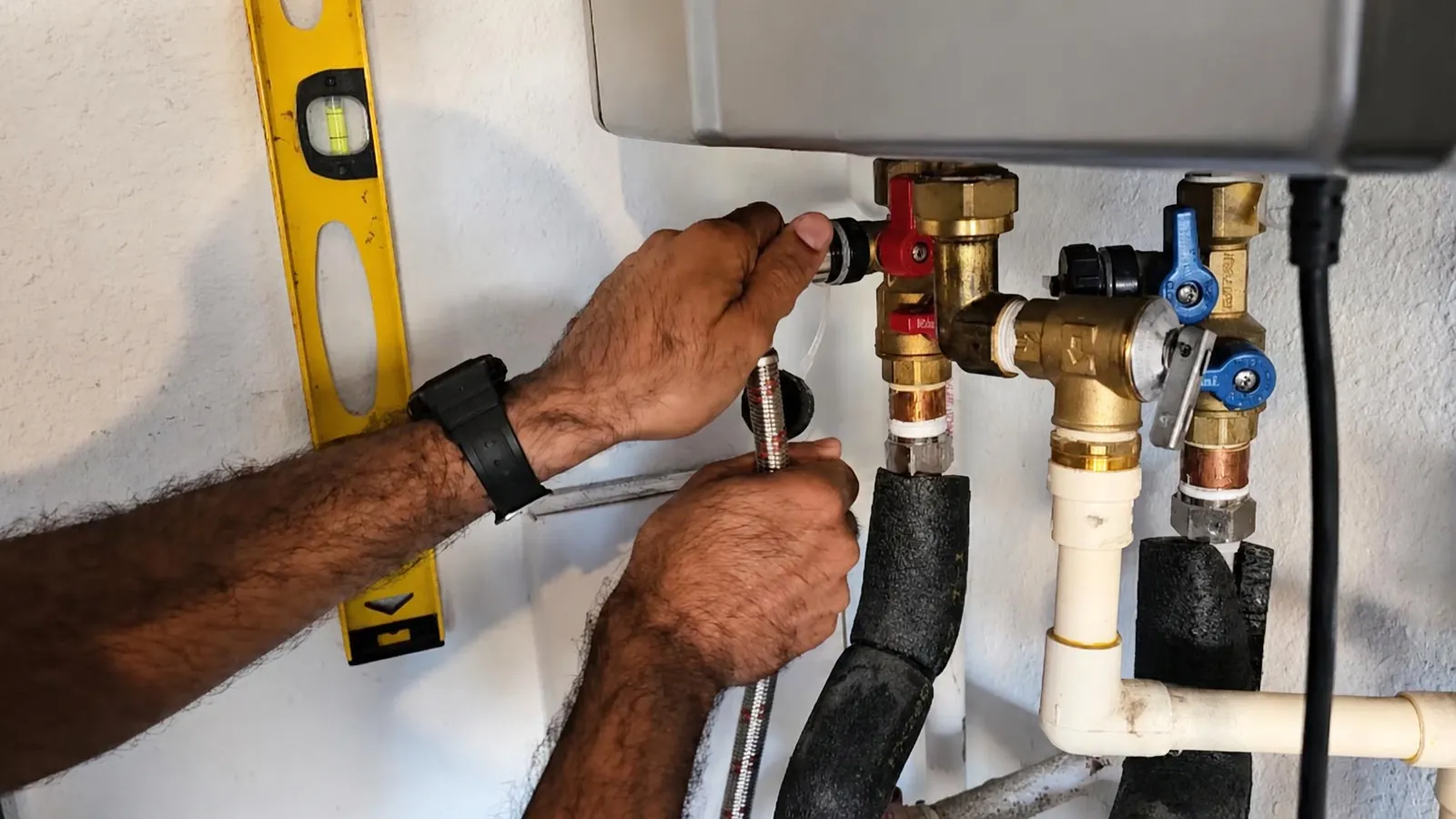
With service valves installed, connect a pump and hoses and circulate the manufacturer-approved solution, then rinse with clean water.
Book an annual check
A plumber inspects burner or combustion, venting, condensate drain, and connections that you should not open yourself.
Flushing and descaling, step by step
A flush needs service valves, which are two extra shutoff valves with small hose ports on the hot and cold lines below the unit. If yours were not installed, a plumber can add them, and it makes every future flush a short job. Without them, do not try to loosen the main unions yourself.
With the valves in place, turn off power and gas to the unit, close the main water valves, connect hoses to the ports, and circulate the descaling solution through the heat exchanger with a small pump. Most manufacturers say white vinegar or their own descaler. Check yours, because some brands warn against certain acids.
Finish by rinsing with clean water, reopening the valves slowly, and checking each connection for drips. Open a hot tap to let air clear out before you turn the unit back on.
Need a plumber, not a guide?
Call the 24/7 line. A licensed, insured plumber, a clear price before work starts.
Symptoms and what usually causes them
Exact error codes differ by brand and model. Use this to sort the cause, then look up your code in the manual.
| Symptom | Likely cause | Homeowner or plumber |
|---|---|---|
| Hot water fades to lukewarm | Scale on the heat exchanger or clogged inlet screen | Homeowner can clean the screen and flush if valves exist |
| Unit will not ignite, code appears | Gas supply, ignition parts, or flame sensor | Check the gas valve is open, then call a plumber |
| Code about exhaust or venting | Blocked, disconnected, or damaged vent | Plumber only, because it involves combustion gases |
| Water swings from hot to cold and back | Low flow, filter clog, or sensor problem | Clean filter first, then call if it continues |
| Condensate water leaking at the unit | Blocked condensate drain or neutralizer | Plumber, since it can corrode the unit |
| Overheat or limit switch trips | Scale, failed sensor, or poor flow | Plumber after you try a flush |
What a homeowner can safely do
These tasks involve water only and require no gas, venting, or live electrical work.
- Read and write down the error code before turning the unit off.
- Confirm the gas valve is open and the unit has power.
- Clean the inlet water filter screen on the schedule in your manual.
- Flush the heat exchanger through existing service valves using the manufacturer's method.
- Check the condensate line for kinks and visible blockage without cutting it.
- Keep boxes, paint, and cleaners away from the unit and its vent termination.
- Never open the gas train, adjust combustion, or remove the vent pipe.
Do it yourself or hire it out
Reasonable for a homeowner
- Cleaning the inlet screen and checking the display code.
- Flushing through service valves with the right solution.
- Keeping the area around the unit clear.
- Writing down symptoms for the plumber.
Better left to a licensed plumber
- Anything involving gas piping, burners, or ignition parts.
- Venting repairs and combustion checks.
- Adding service valves, a condensate neutralizer, or a recirculation line.
- Repeat error codes after a flush.
Park Ridge note: your water comes from Chicago
According to the City of Park Ridge's 2020 water quality report, the city buys all of its drinking water from the City of Chicago, which draws from Lake Michigan. The report does not publish a hardness figure, so we do not guess one here.
For your flush schedule, that means the best data is your own tap. Ask Public Works for the current annual water quality report, test the tap with a hardness kit, and shorten the interval if you see white buildup on fixtures. Replacing a tankless unit also needs a permit under Article 15 of the Municipal Code, so the swap goes through the Building Department.
When the unit quits in January
A tankless heater that stops during a cold snap can mean frozen condensate, a blocked vent, or a frozen supply line. Do not thaw anything with a flame or a heat gun. Shut off the water to the unit, and if you smell gas, leave the house and call the gas emergency number from outside.
Our tankless water heater team handles repair and service, and we take after-hours calls on our 24/7 line. If the unit is beyond saving, water heater replacement options include another tankless or a return to a tank.
Where we work
We serve Park Ridge and nearby towns, including Glenview to the northeast and Mount Prospect to the northwest. Tankless units there face the same scale and venting questions, though each town's water supplier is different, so check your own report.
Frequently asked questions
Follow your manufacturer's schedule. Many brands call for a yearly flush, and homes with visible scale on fixtures may need it more often. Test your tap to see how heavy your scale is.
Many manufacturers allow white vinegar, but some name their own descaler, and a few warn against certain acids. Check the manual for your model before you pour anything in.
Energy.gov says proper maintenance is key to a long tankless life. A yearly visit lets a plumber check venting, combustion, and the condensate drain, which you cannot safely inspect yourself.
It depends on the brand. Codes usually point to ignition, flow, venting, or temperature problems. Write down the code, check the manual, and call if it returns after a reset.
Park Ridge buys Chicago water, and its 2020 report publishes no hardness figure. Ask Public Works for the current annual report, then test your own tap with a kit.
Park Ridge's Article 15 requires a permit for plumbing installations and alterations, and rules vary by job. We confirm with the Building Department before swapping a unit.