
What the fizz actually does
Soda is a mild base and vinegar is a weak acid. Together they bubble carbon dioxide and leave mostly salty water. The bubbling can lift a thin coat of grease from the pipe wall, and the mild alkalinity helps cut some odor.
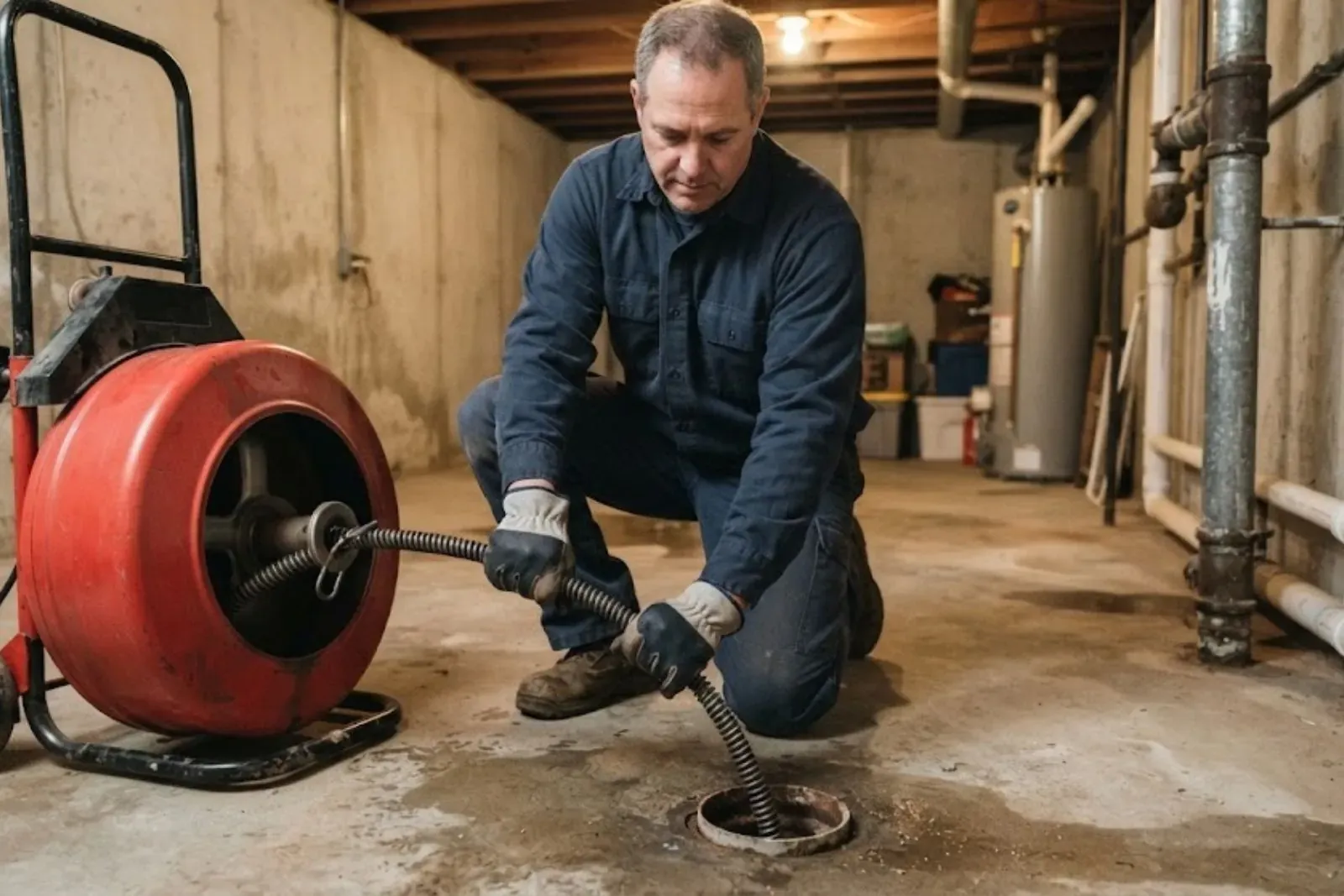
It does not have the force to move a plug. A hair clump in a bathroom trap or a grease plug in a kitchen line needs mechanical help, such as a plunger, a hand auger or a plumber's cable machine.
Does it work for your drain
| Situation | Baking soda and vinegar | Better move |
|---|---|---|
| Mild odor from a kitchen sink | Worth a try | Clean the stopper and strainer too |
| Slow bathroom sink with hair | Weak | Pull the stopper and clean the trap or use a hand tool |
| Water standing in the sink | Will not help | Plunge, then call if it stays |
| Several drains gurgling | Will not help | Main line problem, call a plumber |
| Greasy kitchen line that slows again | Brief relief | Cable or hydro jetting to scour the pipe |
Safe steps for a light film or odor
Do this only on a drain that still passes water.
- Remove standing water and clear any visible debris from the strainer.
- Pour in about half a cup of baking soda, then add half a cup of white vinegar.
- Cover the drain with a plug or wet cloth for a few minutes so the fizz works downward.
- Flush with a kettle of very hot tap water, not boiling water, if your pipes are plastic.
- Run the cold tap for a minute and watch how fast it drains.
- Stop after one or two tries, because repeating it will not turn into a stronger cleaner.
Need a plumber, not a guide?
Call the 24/7 line. A licensed, insured plumber, a clear price before work starts.
Never mix it with chemical cleaners
Do not follow or precede baking soda and vinegar with a store-bought drain cleaner. Acids, bleach and lye products can react with each other or with leftovers in the trap, giving off hazardous fumes or splashing back. If a chemical product is already sitting in the drain, do not add anything, keep the room ventilated, and tell your plumber what was used.
Kitchen sink versus bathroom sink
Kitchen drains clog from grease, food scraps and soap residue. A hot flush and the mild fizz can slow that buildup, but cooked fat that cools in a pipe turns into a solid. The long-term fix is to keep fat out, wipe pans before washing and use the strainer.
Bathroom drains clog from hair wrapped in soap scum. The stopper mechanism is usually the culprit, so pulling it and cleaning it does more than any mix. Neither works if a branch line or the main is the real blockage.
Home remedy or plumber
Reasonable to try at home
- A drain that is slow but moving.
- A musty smell after a vacation.
- A first clog in a single fixture.
- A plunger or small hand auger within reach.
Stop and call a plumber
- Water that will not go down at all.
- Two or more fixtures slow, or a toilet bubbling when the sink drains.
- A clog that returns within days.
- Any chemical cleaner already in the line.
- Water or sewage showing at a basement floor drain.
Habits that keep a drain flowing
Prevention beats any mix. Wipe greasy pans with a paper towel before washing, drop a mesh strainer into every kitchen and shower drain, and empty it into the trash. Those three habits remove most of what blocks a house drain.
Run hot water for a few seconds after washing dishes so loose grease travels past the trap. Do not flush wipes, even ones sold as flushable, because they hold together in the pipe long after paper would break apart.
When the problem is bigger than the sink
If the clog returns, the pipe may be coated with grease or scale, or a belly or root intrusion further down may be catching debris. Hydro jetting washes the pipe wall with high pressure water and clears what a cable only pokes through, which is described under hydro jetting.
Our licensed plumbers can also run a camera if the same line keeps slowing down, so you know whether you are fighting grease or a damaged pipe.
Park Ridge note: where your drain water goes
According to the Park Ridge city FAQ, the homeowner repairs the private sewer lateral up to and including the connection to the sewer main, under Municipal Code 11-1-6. The same FAQ recommends a sewer cleanout for inspection access.
That tells you a house drain that keeps clogging may be a lateral problem, which is yours to repair, not a city one. If a sink clears but the basement floor drain gurgles, ask your plumber to check the cleanout and the lateral. The city's hazard plan also notes combination sewers, so keep a heavy rain in mind when drains slow down.
Nearby towns and the same advice
Homeowners in Norridge and Glenview ask the same question, and the answer holds anywhere. A mild home remedy is fine for a mild problem, and a stubborn one deserves a real tool.
Frequently asked questions
Used once in a while it is gentle on most pipes. Do not pour boiling water into plastic pipes or old porcelain, and never combine it with chemical drain cleaner.
A few minutes is enough for the fizz. Long soaks do not add strength because the reaction ends quickly.
The odor may come from the overflow hole, the stopper, a dry trap or a vent problem. Clean those first, and call if it returns.
A little baking soda is fine for odors, but do not run chemicals into a jammed disposal. A jammed unit needs a plumber or a hex key at the bottom.
Chemical cleaners can harm pipes and are risky for whoever clears the line next. Try a plunger or hand tool, then call if it stays slow.
No. A gurgle at a basement drain suggests a lateral or main line restriction, and under Municipal Code 11-1-6 as quoted by the city FAQ the lateral to the main is the homeowner's to repair, so have a plumber check it.